Wesfarmers continued to perform very well and provide
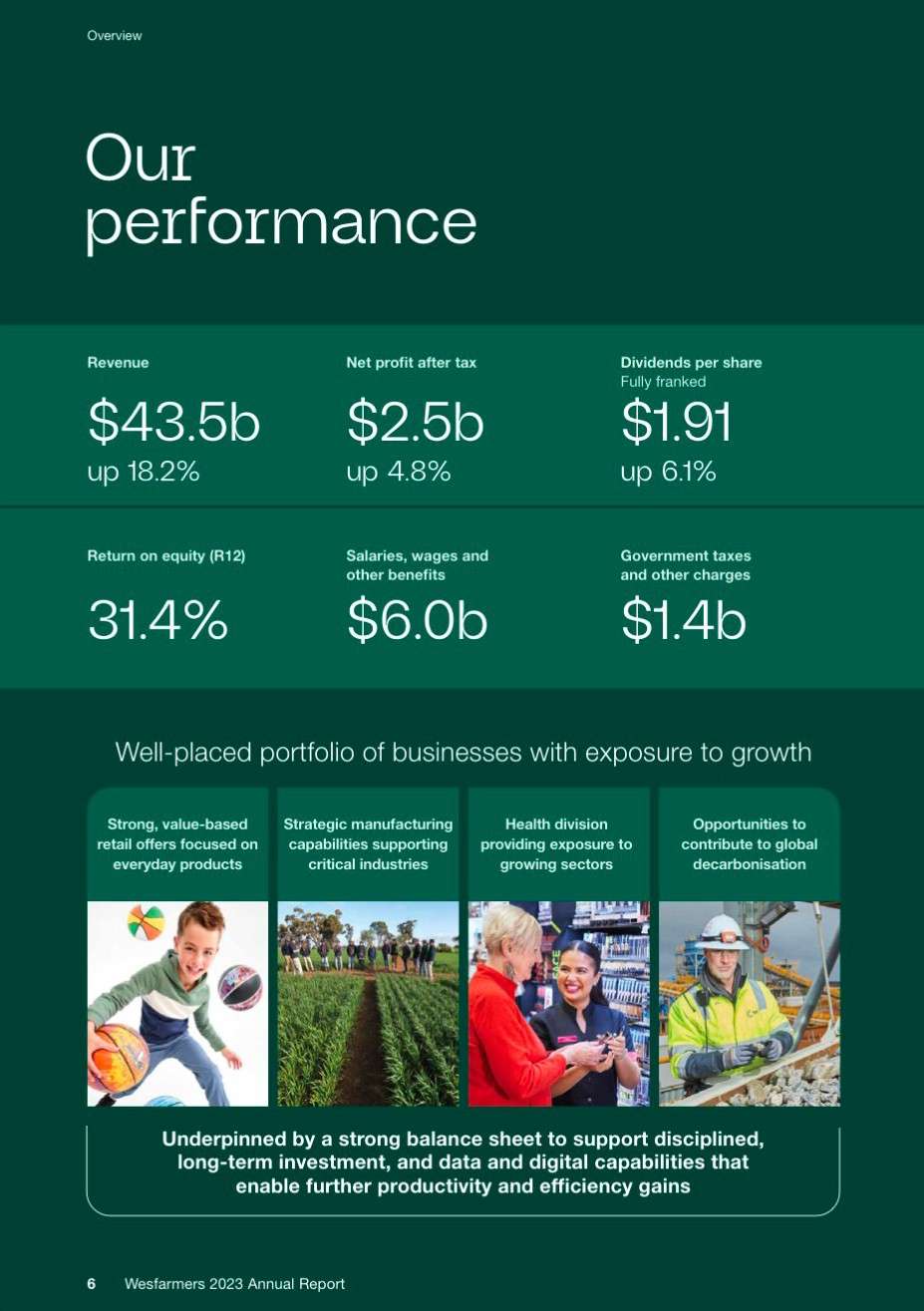
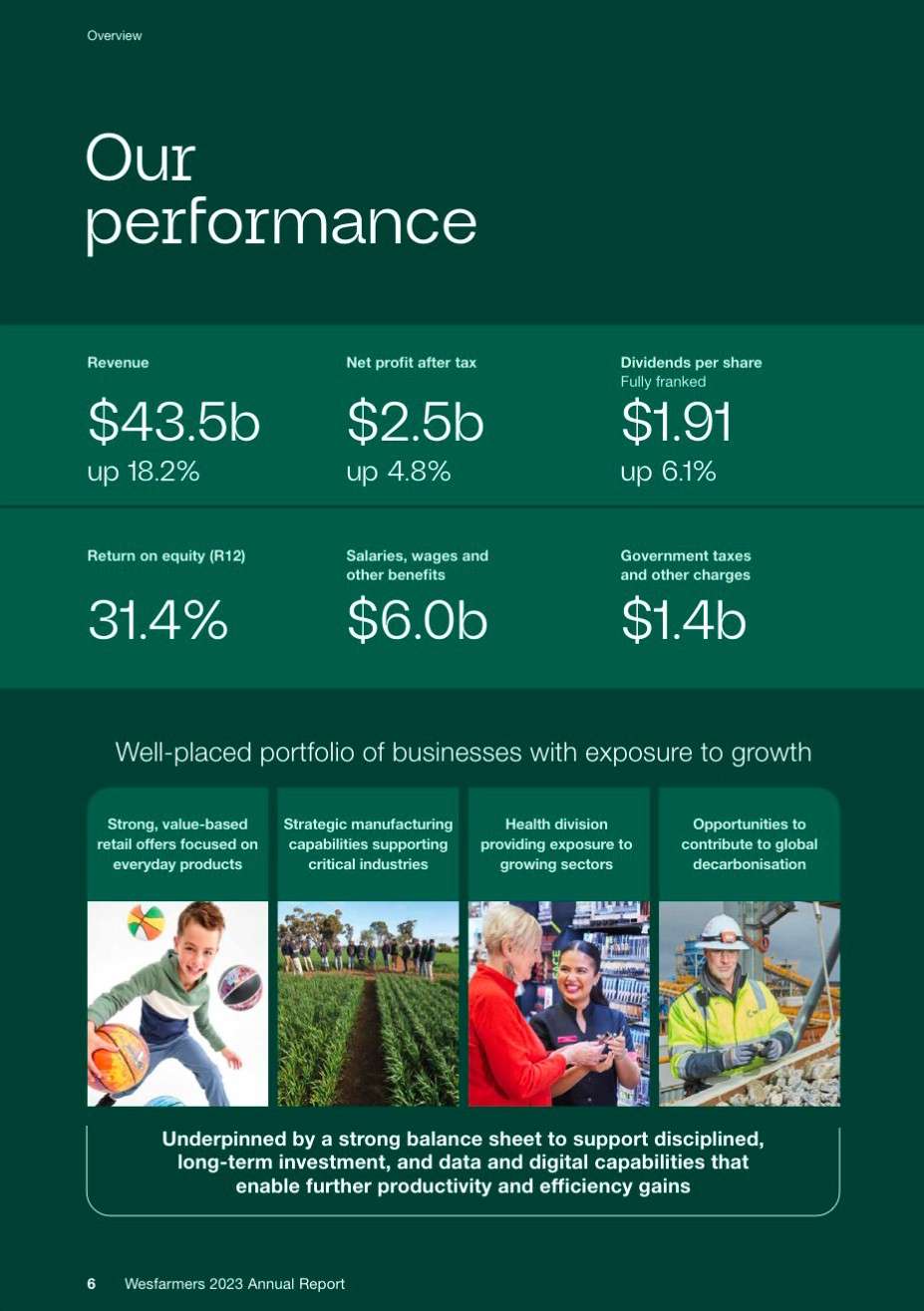
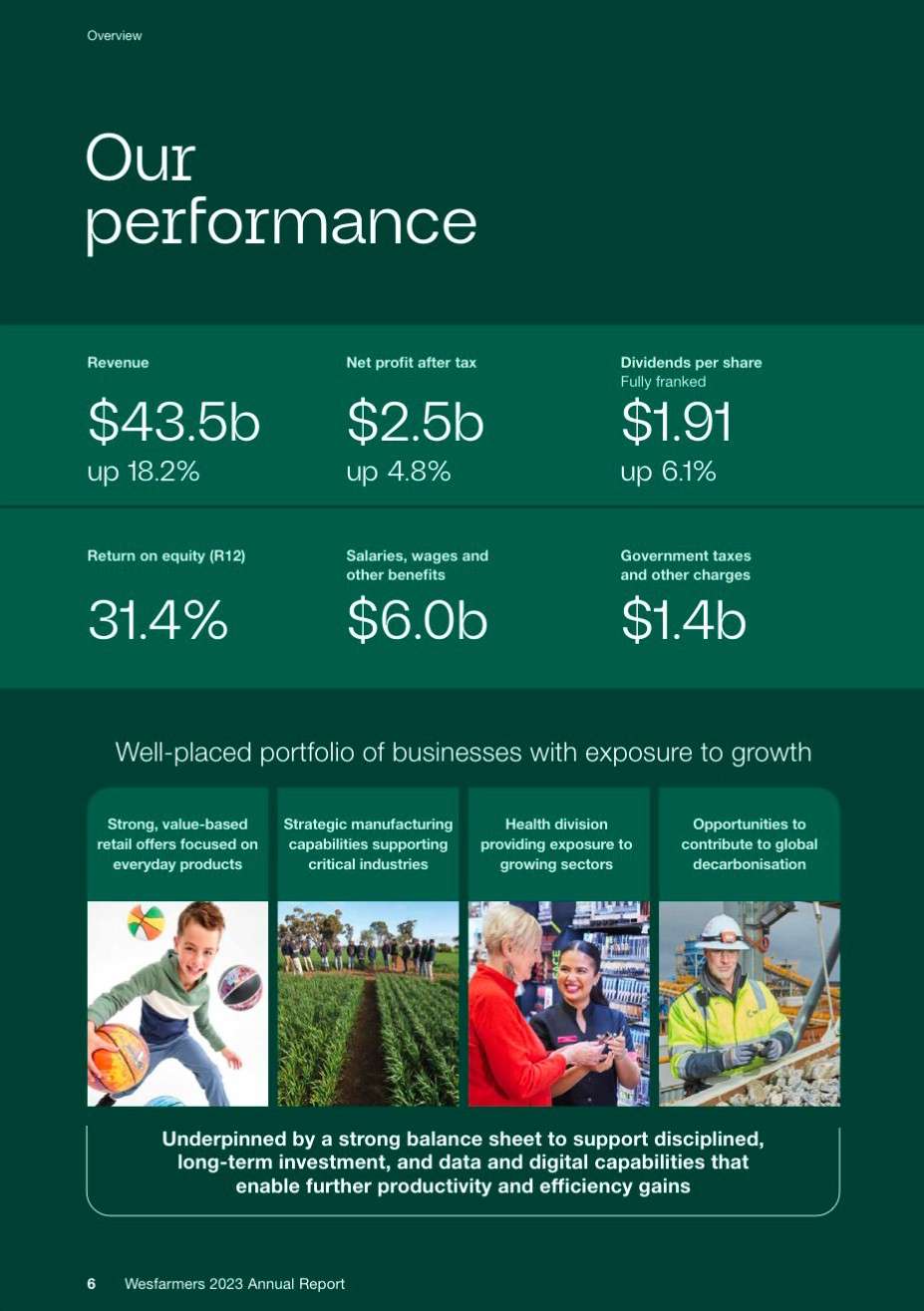
good returns to its shareholders. The Group recorded a net profit after tax for the 2023 financial year of $2.5 billion,
up five per cent on the previous year. The directors declared fully-franked dividends totalling $1.91 per share, comprising an 88 cent interim and a $1.03 final dividend. This compares with total dividends in the previous year of $1.80 per share. As described more fully in the Managing Director’s report, the strong result arose from increased earnings in our retail, chemicals and industrial operations.
We continued to progress significant digital and data investments expenditures which reduce the bottom line but are essential to the company’s future success. It would be no exaggeration to say that the past three years have been
characterized by more uncertainty than in any similar period over recent decades. Consumer demand has been both unpredictable and volatile, as the COVID-19 pandemic progressed through different phases, and as very low interest rates, designed to counter potential. Economic slowdowns, rapidly increased to higher levels, in response to inflationary pressures. Against this backdrop, it is pleasing that the positioning of Wesfarmers’ businesses together with good efforts by management have resulted in continued resilience in our sales. As interest rate rises took hold, consumers moved towards lower-priced products and our Kmart business, for example, was strongly supported.
A key to operating successfully, regardless of the external environment, has been engaging in constant innovation; and we have seen many examples in the Group. Apart from rolling out new stores, Bunnings has expanded
its ranges – in tiles, specialist tools and, most recently, pet products. Kmart has focused on expanding its high-quality,
low-priced Anko ranges and converted a number of Target stores to its brand. Officeworks has become a leading
retailer of technology products. At a portfolio level, we have moved into the lithium and healthcare industries.
The Wesfarmers of today is very different to the Wesfarmers of a decade ago and, in fact, of every decade since we listed on the stock exchange in 1984. That has
undoubtedly resulted from the fact that we are driven by our single objective to provide a satisfactory return to shareholders – an objective that focuses our strategies on shareholder wealth creation rather than empire building.
Fundamental to achieving the objective has been looking after the interests of our stakeholders – a subject I’ll return
to later in this letter. A company’s prosperity is obviously a
function of the decisions made by its management and board, but also of the environment in which it operates. A
prosperous country enables prosperity amongst its citizens and organisations of all types. In this regard, we share the
concern expressed by others about whether Australia is doing all it must, to maintain its advantaged place in
the world. Of specific concern is the question of the country’s weak productivity growth, without which our standard of living and capacity to provide the social services and infrastructure that Australians expect, will be threatened. Policies and actions by the Federal Government have a major influence on this issue and some of the industrial relations changes made and proposed are concerning in this regard. Some seem to have been
designed to address specific issue. Where there is no apparent cause for concern and without an appreciation of
potential negative, wider implications and consequences.
One example is the proposed ‘same job, same pay’ legislation. A concept like this, which on the face of it seems fair, may in practice have detrimental outcomes for
both employees and businesses. It is important to understand that the proposal is not about equal pay for men and women. It focuses on labour hire and contract workers who are essential and widely used by governments and private sector businesses, including to meet cyclical or seasonal needs, changes in economic conditions and to access the specialized skills that they require from
time to time.
The problems with the proposal include the likely inequity of the outcome and the potential complexity that would
accompany its implementation. Based on the information provided to date, employees with more experience would
get paid the same as those with less skills and knowledge. The significant resources required to oversee and administer such a scheme may also cause small operators to become unviable and constrain the expansion of larger businesses, detrimentally affecting employment, productivity and competitiveness on a domestic or global scale.
Similar problems arise with the Government’s proposals regarding casual employment. The devil is in the
detail, but it is unclear what problem is being addressed. The changes may impact not just productivity, but also
workers themselves, including young people and individuals with caring responsibilities who value the flexibility to
accept the shifts that suit their personal commitments and higher hourly rates associated with casual work.
Our hope would be that in contemplating changes like those described, governments would engage deeply with
business and others, to assess the potential wider effects and unintended consequences of their proposals, and
apply a long-term productivity improvement overlay, knowing its importance for national prosperity.
Productivity is also critical to our international competitiveness in a world where global market dynamics and regional instabilities can affect the operations of our businesses and demand for their products and services. What happens in economies offshore is obviously outside our control but one action we can take is to make sure we
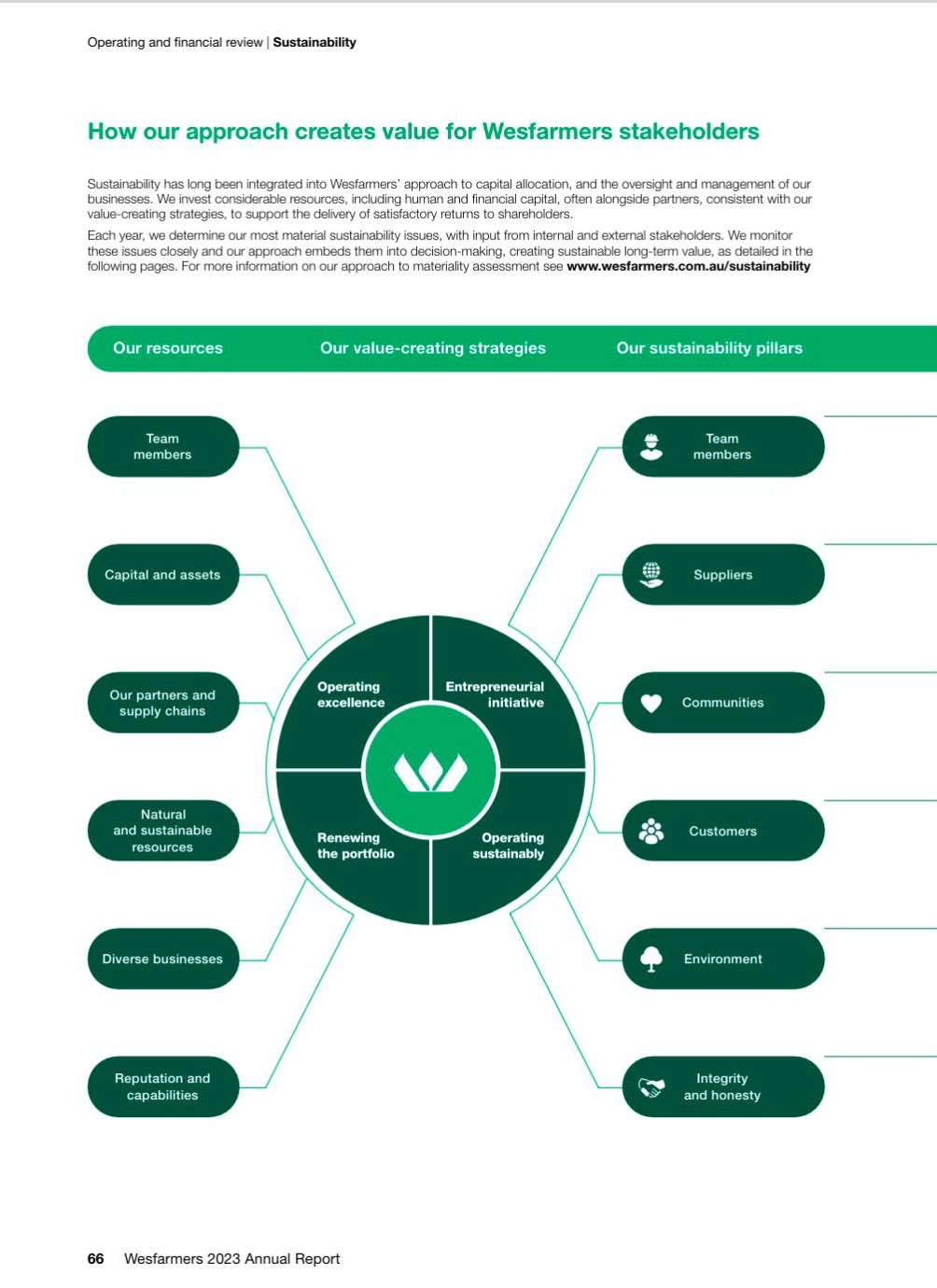
continue to have a strong balance sheet. Combined with maintaining strong disciplines in our investment activities, this should ensure that the company continues to prosper in good times and bad. In recent times, there has been some public commentary on the question of companies focusing on environment, social and governance (ESG) matters, rather than on shareholder wealth creation. Of course, many ESG initiatives and reporting on them are now mandated by governments, stock exchange listing
rules and emerging international reporting standards, but regardless of that, we do not see any conflict between looking after the interests of our shareholders and those
of our other stakeholders. You can’t achieve the former without doing the latter.
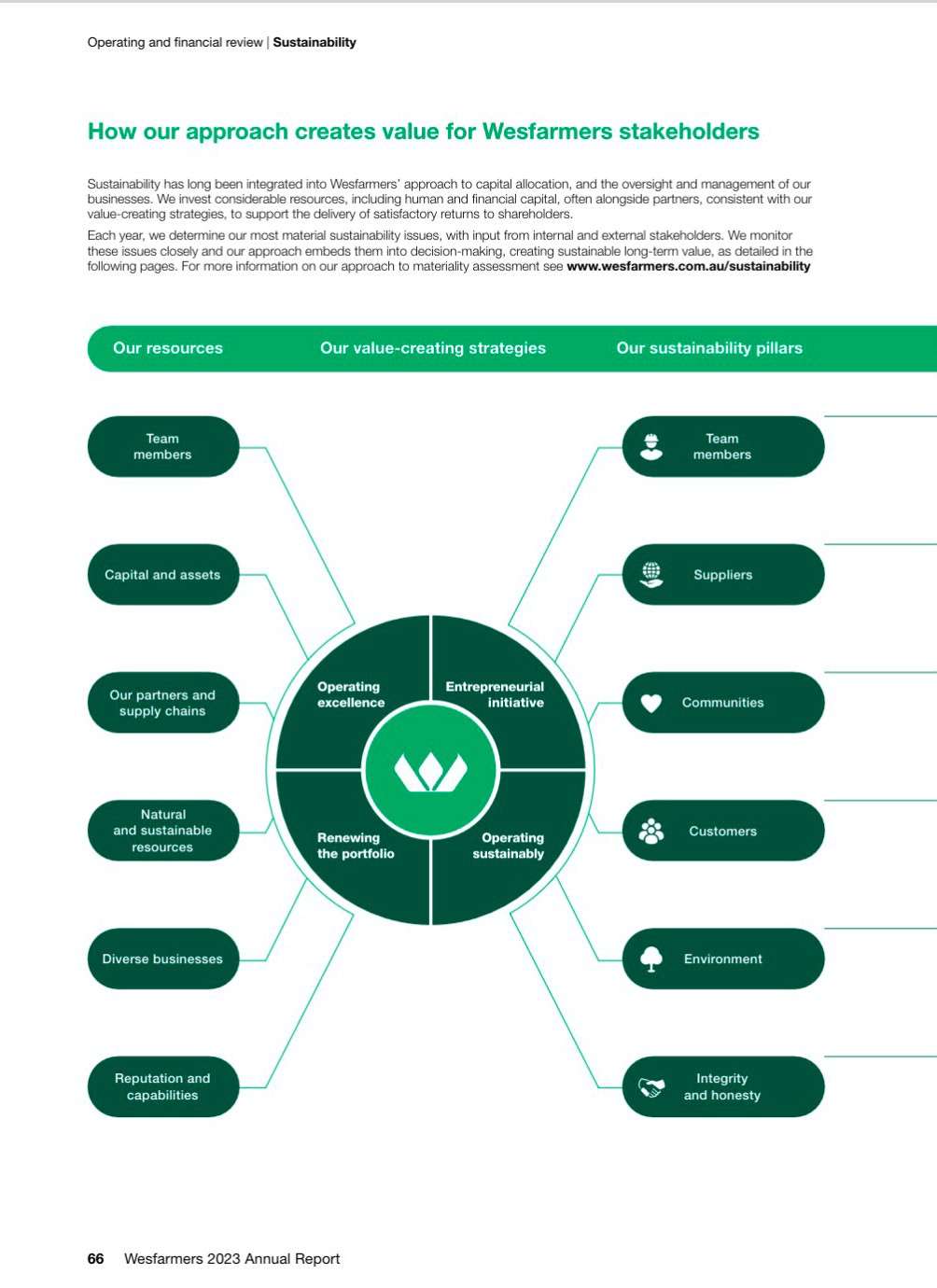
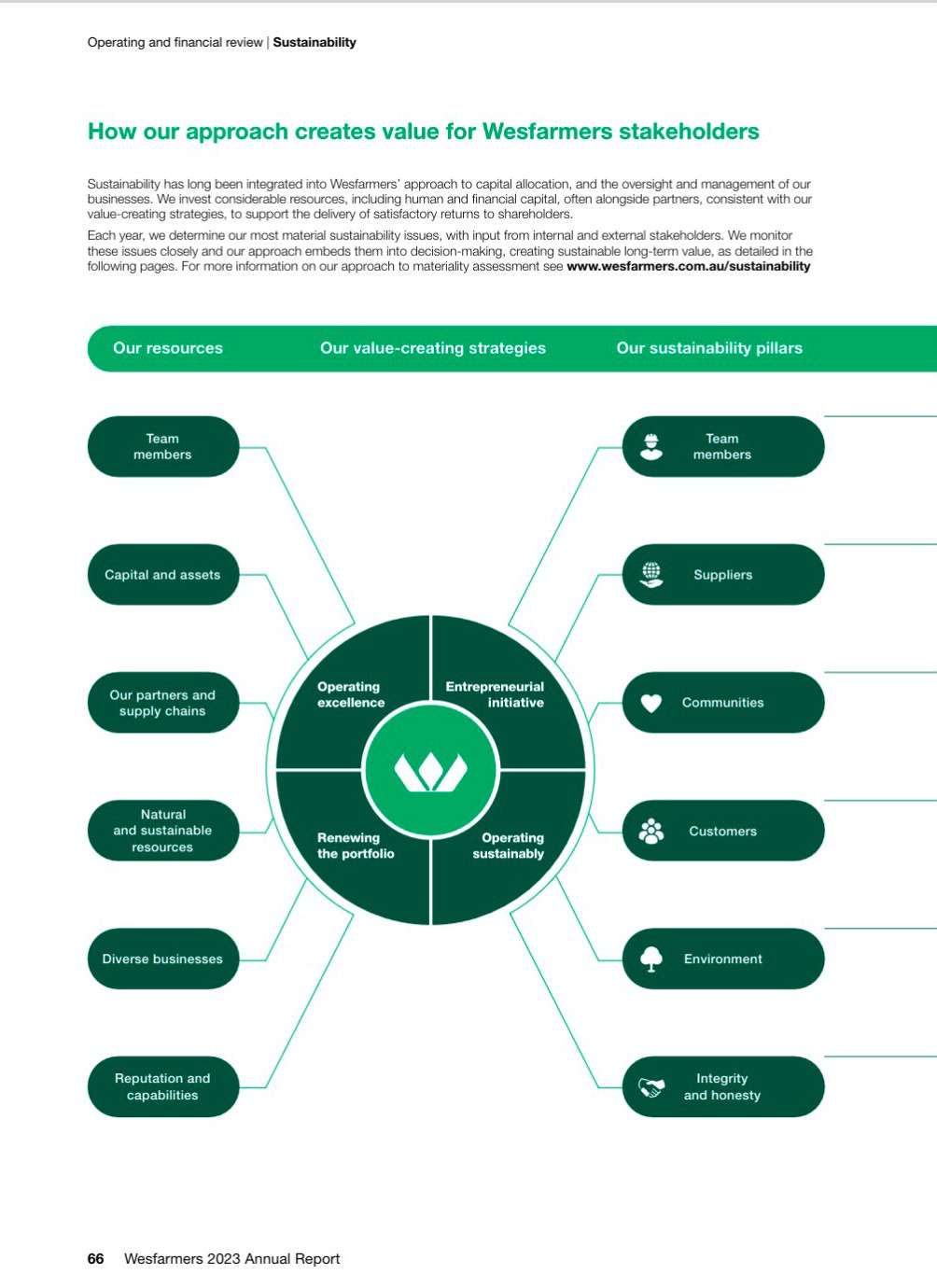
Wesfarmers has set out its position on these issues on many occasions but it is worth summarizing them again here. As a publicly-listed company we have one objective: to provide a satisfactory return to our shareholders. Why?
Because that is why people buy and hold our shares: with the aim of earning superior returns. Since our listing,
however, we have consistently stated that we aim to achieve satisfactory returns by looking after our employees,
providing attractively-priced, quality products to our customers, dealing fairly with our suppliers, protecting the
environment and supporting the communities in which we operate. All of those stakeholder-orientated strategies are essential ingredients for long-term shareholder wealth creation.
If done well, we’ll be seen as an ethical company; good people will want to work for us, customers will buy our products, suppliers will trust us to pay them on time,
other companies will want to work with us, and communities and governments will see us as a company worth supporting our growth ambitions.
Wesfarmers has historically been one of the largest contributors to community organisations, ranging across health, education, Indigenous welfare and the arts. Our businesses are also active supporters of their local communities. It is no coincidence, in our view, that we have
also been one of the most successful financially. The two go hand in hand. In closing, on behalf of the Board I convey our thanks to Vicki Robinson, our Company Secretary, who retires at this year’s Annual General Meeting. Vicki has provided outstanding professional service to the company and Board over her 20 years of service in legal affairs,
our businesses and governance. I also acknowledge with gratitude the efforts of the around 120,000 people employed in our Group. We thank our management team led so ably by Chief Executive, Rob Scott, for their dedication to the company and its welfare. We look forward to continuing the success of the company in the years ahead.
Michael Chaney AO
Chairman.
Our performance
The Group’s continuing businesses generated net profit after tax of $2.5 billion, an increase of 4.8 per cent, excluding significant items. Divisional earnings before tax grew 12.9 per cent on the prior year.
Across the Group, our financial performance reflected strong operational execution. While growth in the retail
businesses moderated in the second half, with pressure on household budgets impacting trading conditions, consumers have increasingly sought value which has
benefited our businesses.
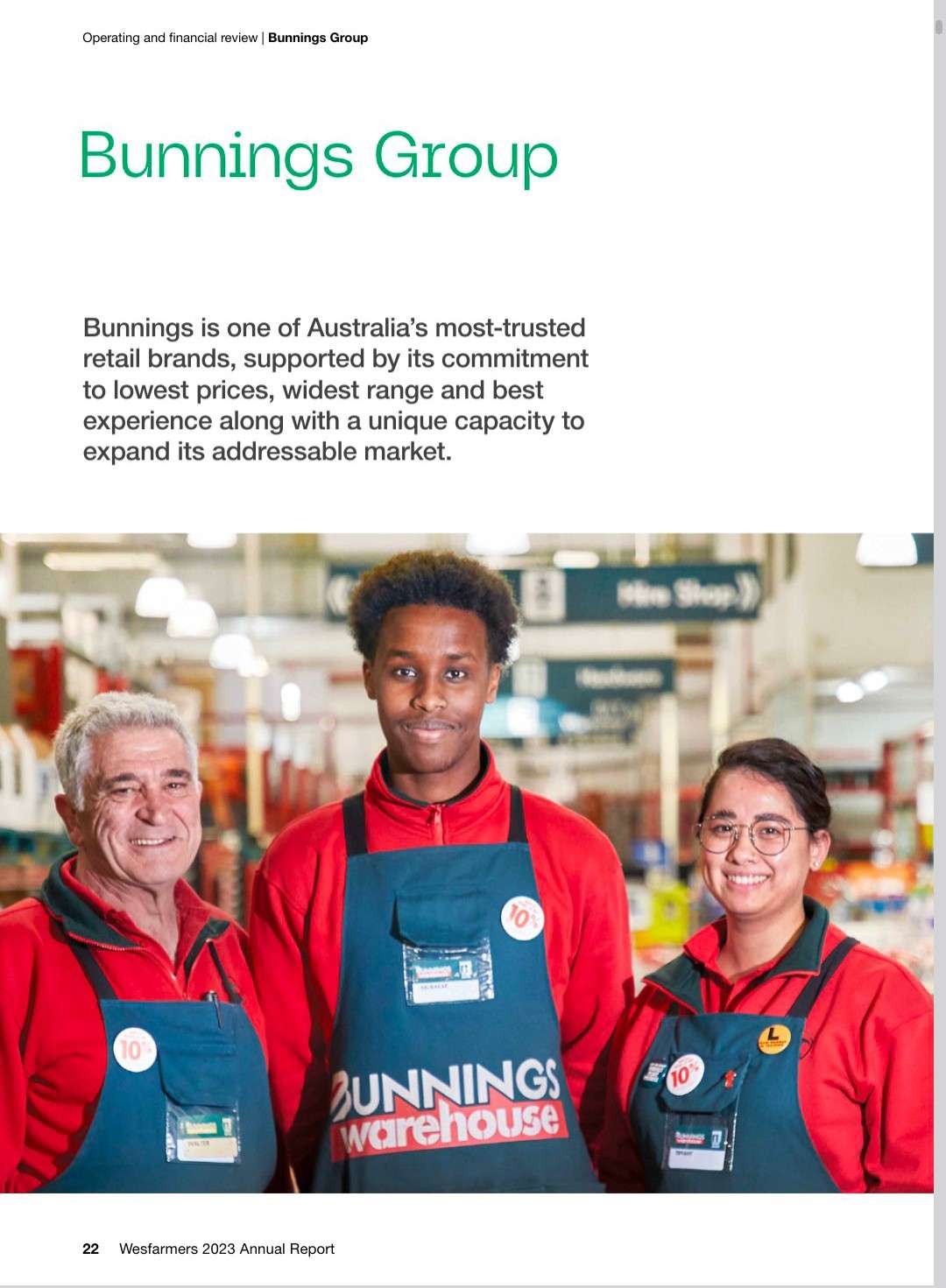
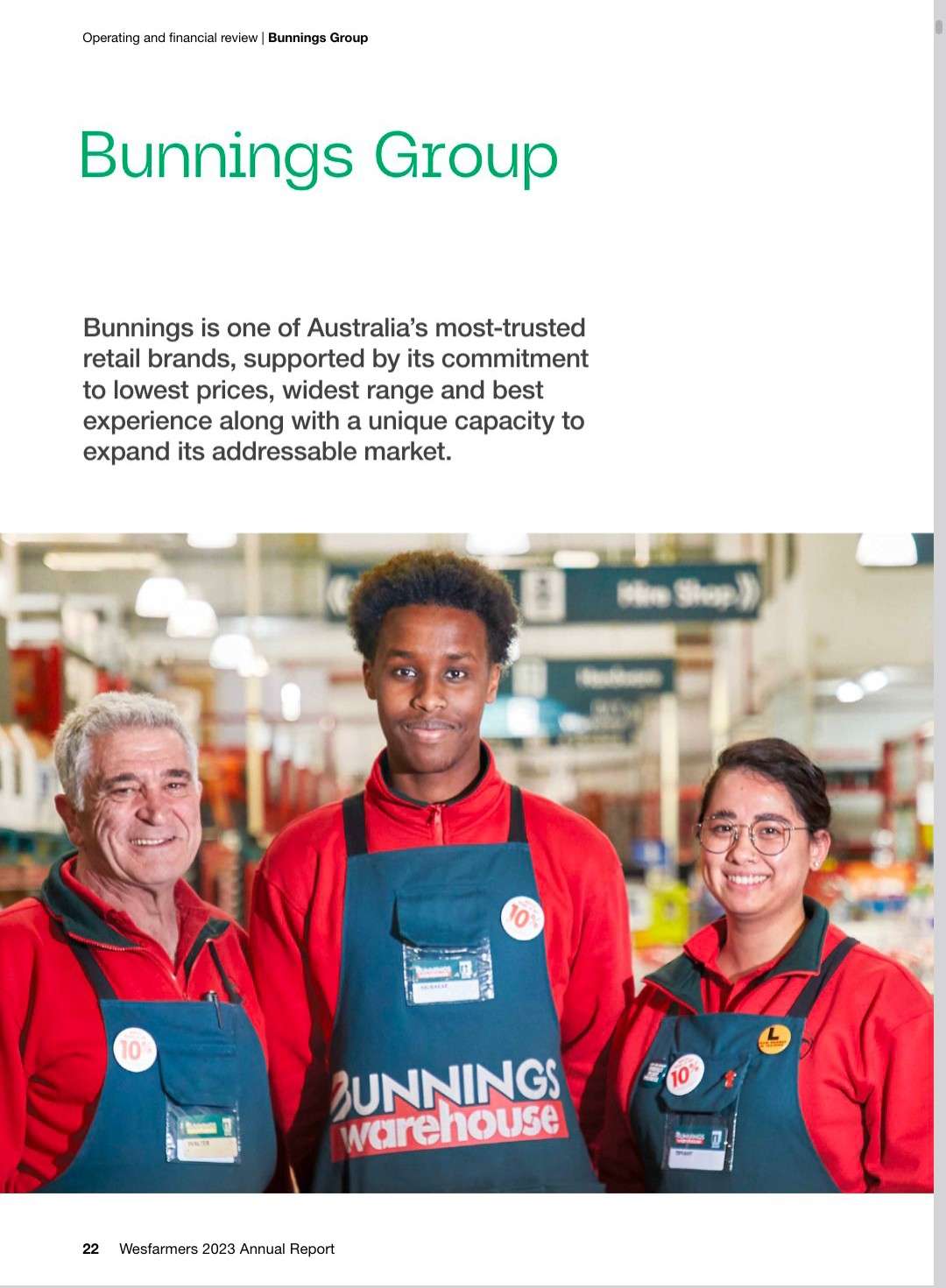
Bunnings delivered solid earnings and another record result, while continuing to expand its addressable market and
participation across consumer and commercial segments.
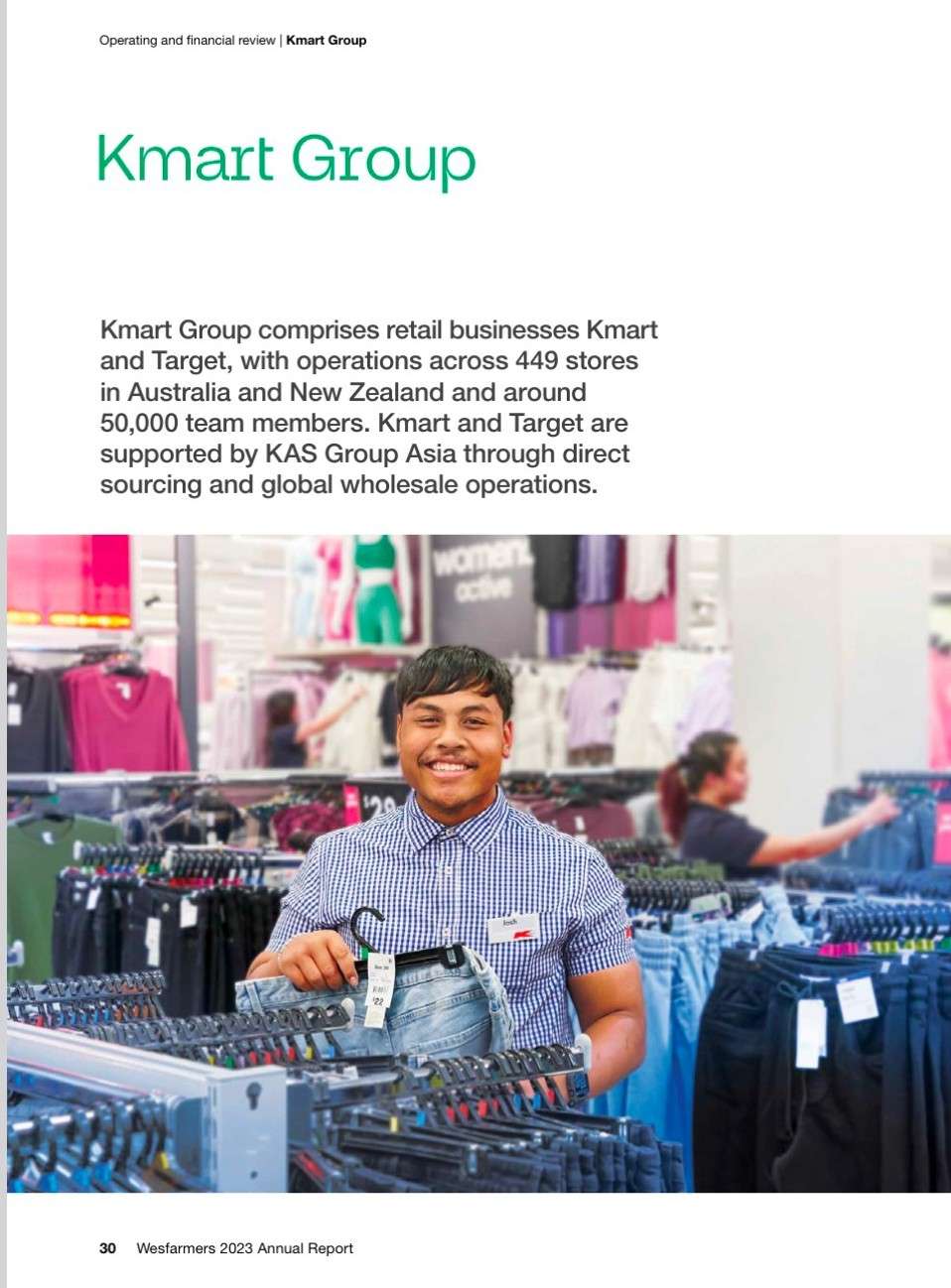
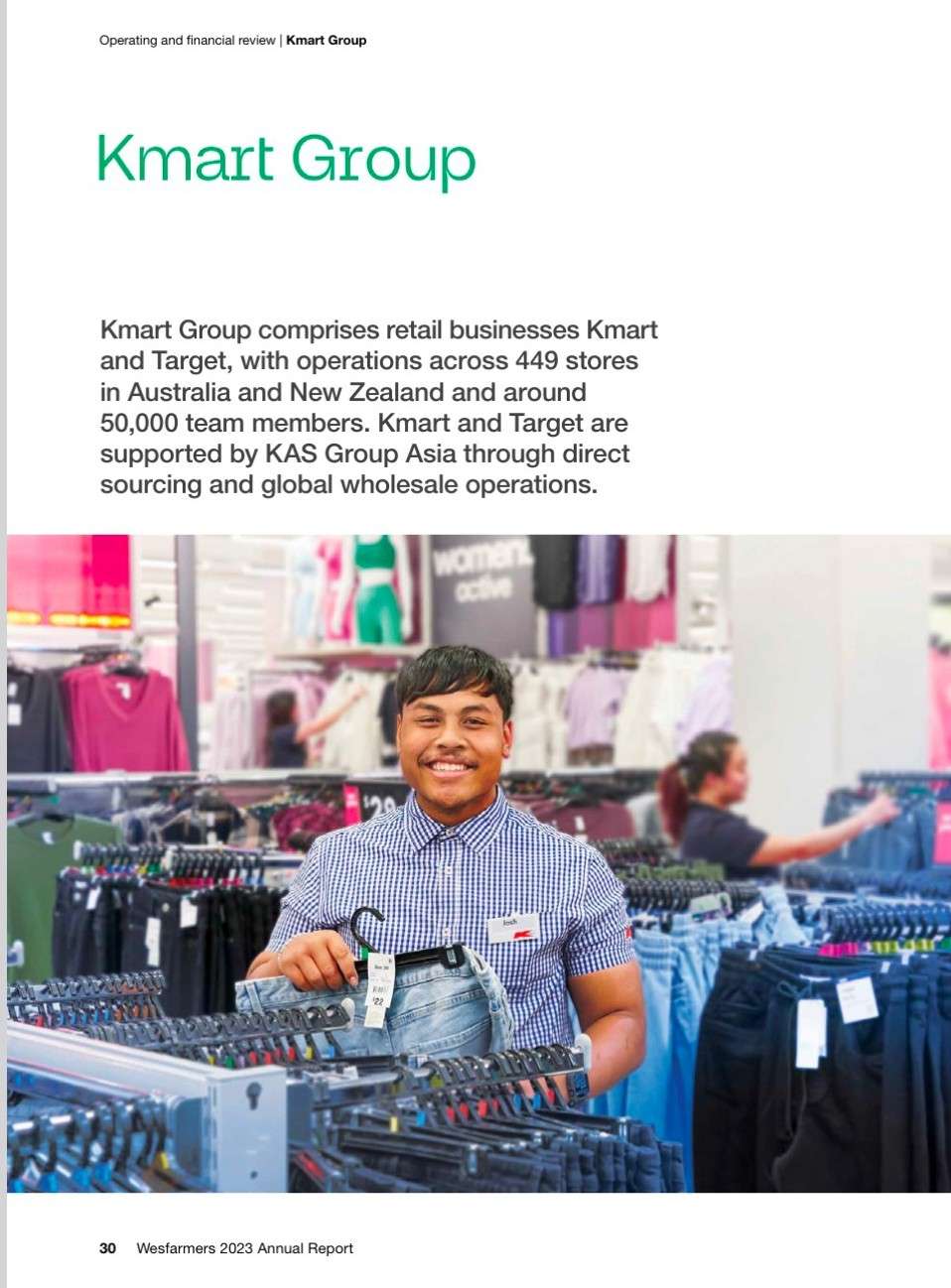
Kmart Group reported strong growth and record earnings, with its unique product development capabilities and scale
providing customers with a compelling offer at very competitive prices. Kmart’s investment in technology and digitisation of business processes is starting to deliver
meaningful commercial benefits and helping to keep prices low.
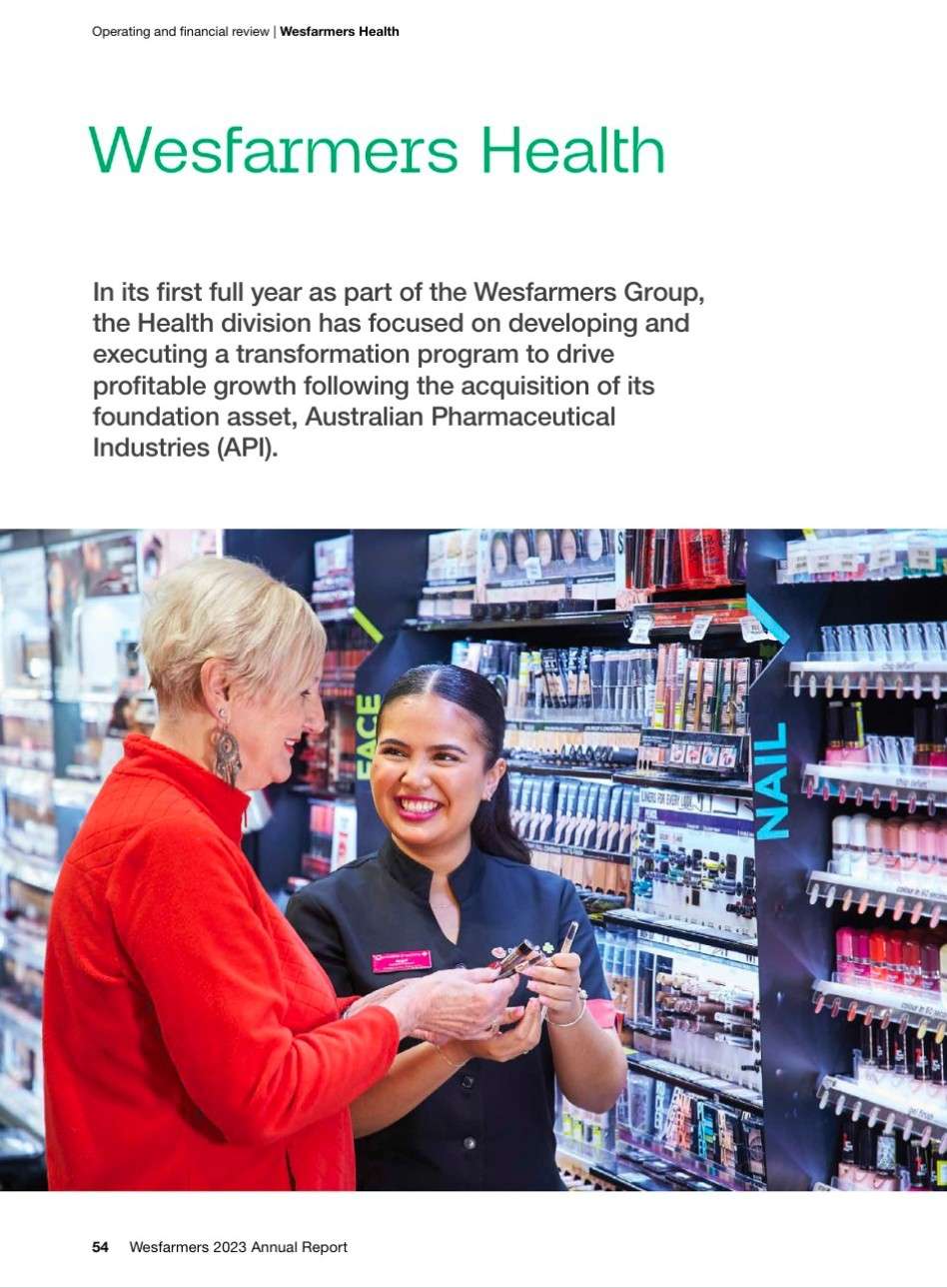
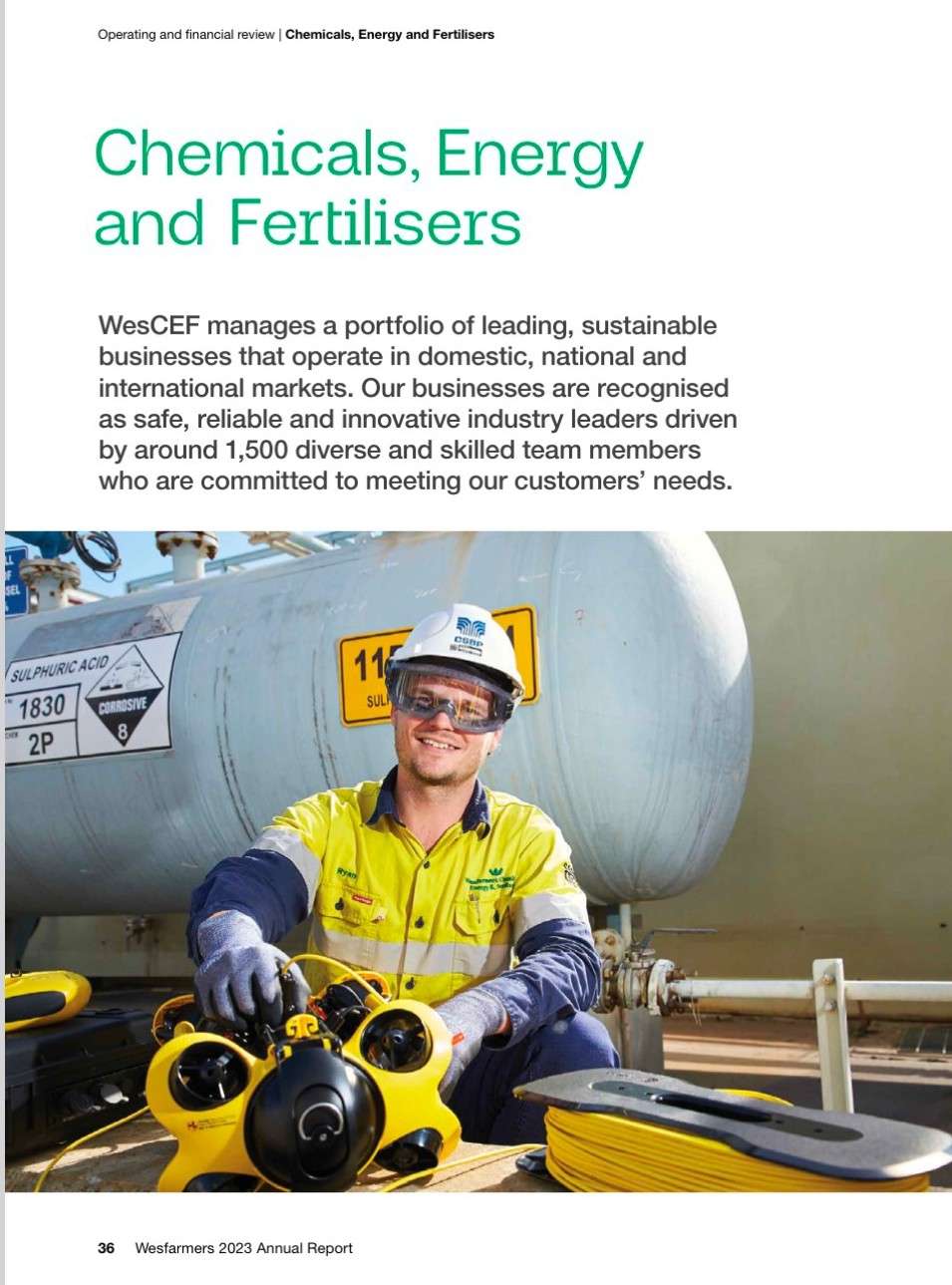
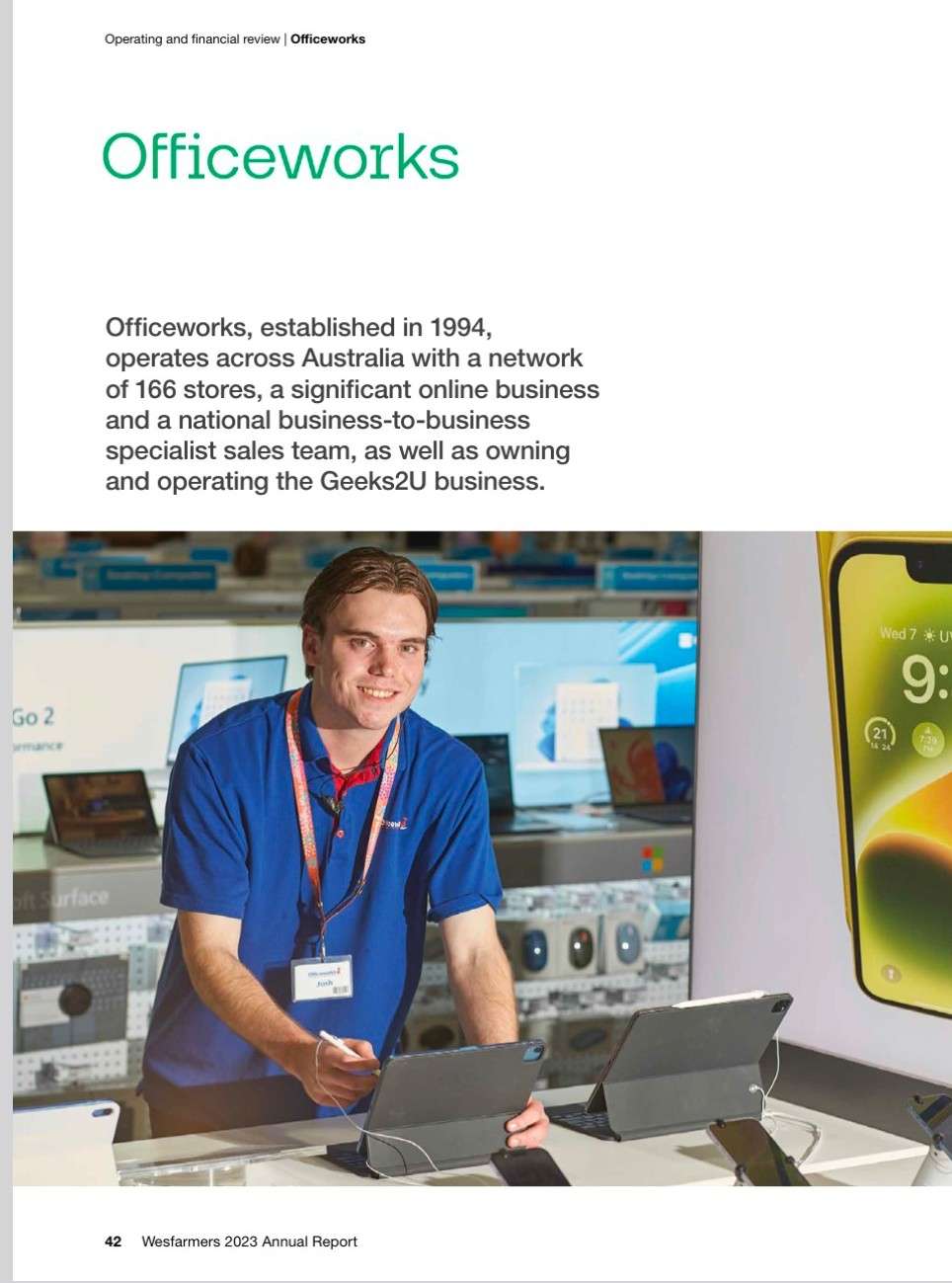
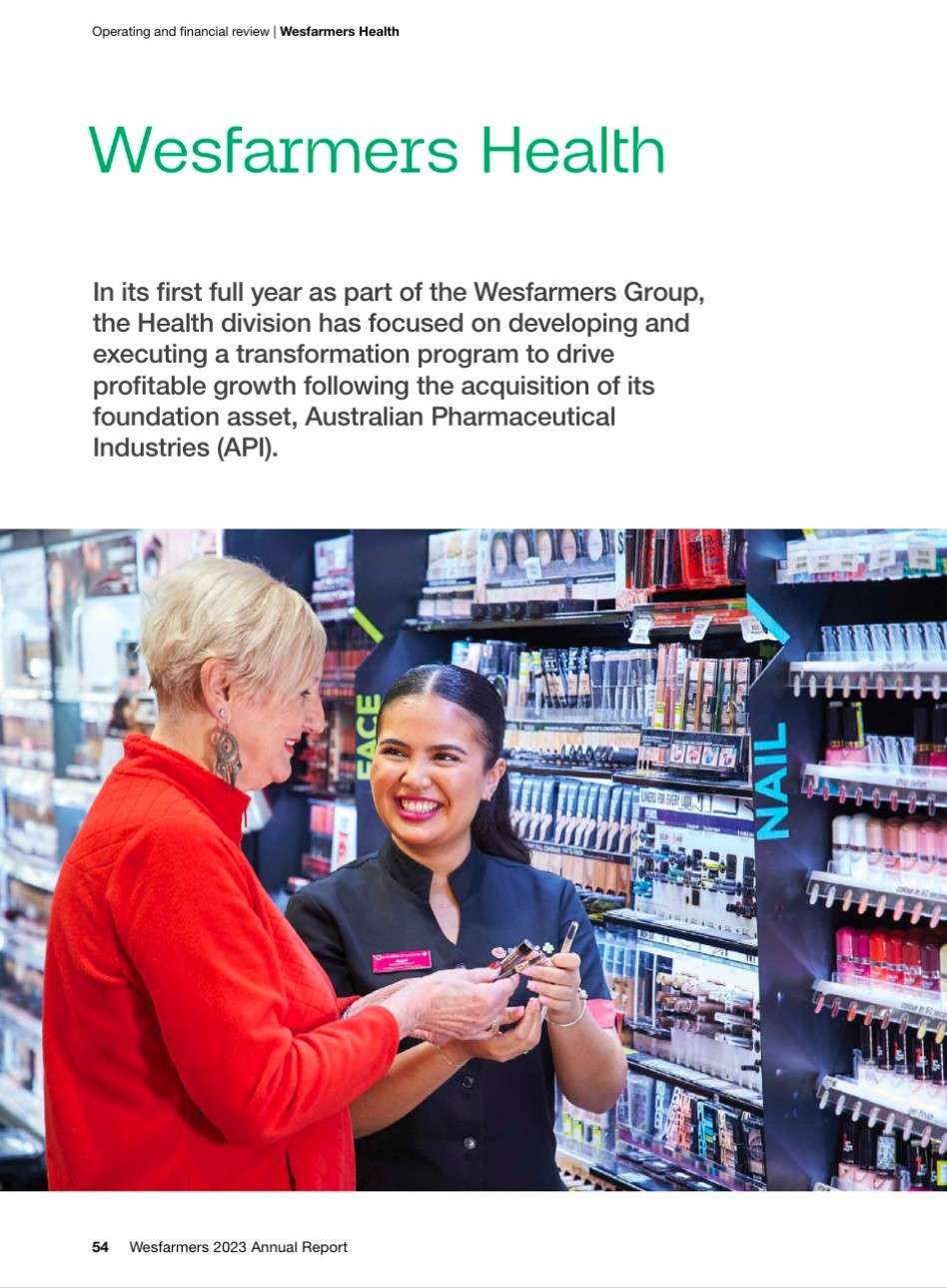
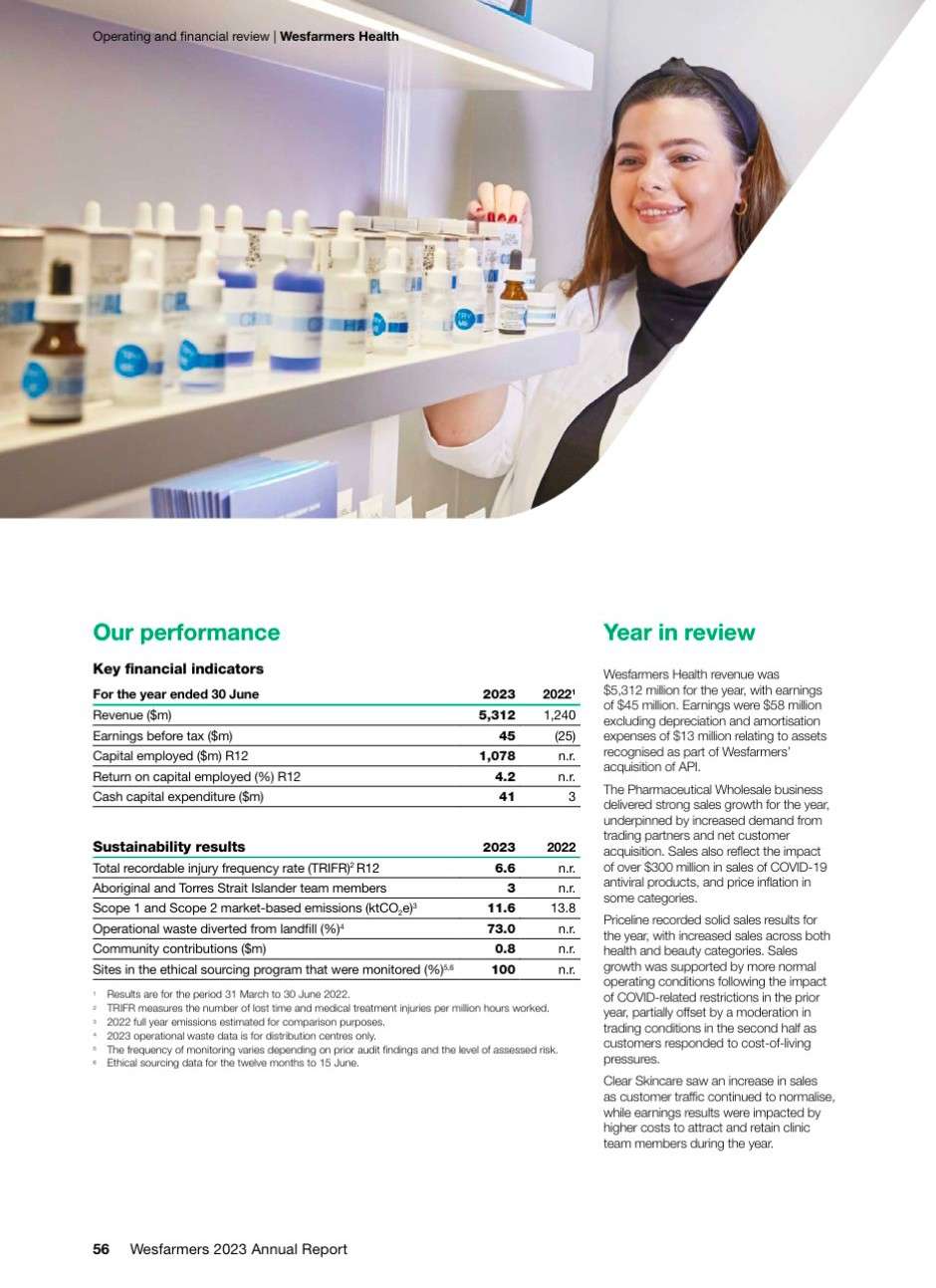
Wesfarmers also delivered record earnings, supplying industrial products to critical export industries, achieving very high levels of operational efficiency and strong safety performance. Wesfarmers benefited from strong global ammonia prices during much of the year. It was pleasing to see earnings growth in Officeworks, which is realising the benefits of strategic investments in recent years, and continued improvement in performance at Industrial and Safety. With its first full year under Wesfarmers ownership, the Health division delivered improved earnings and focused on accelerating its transformation activities,
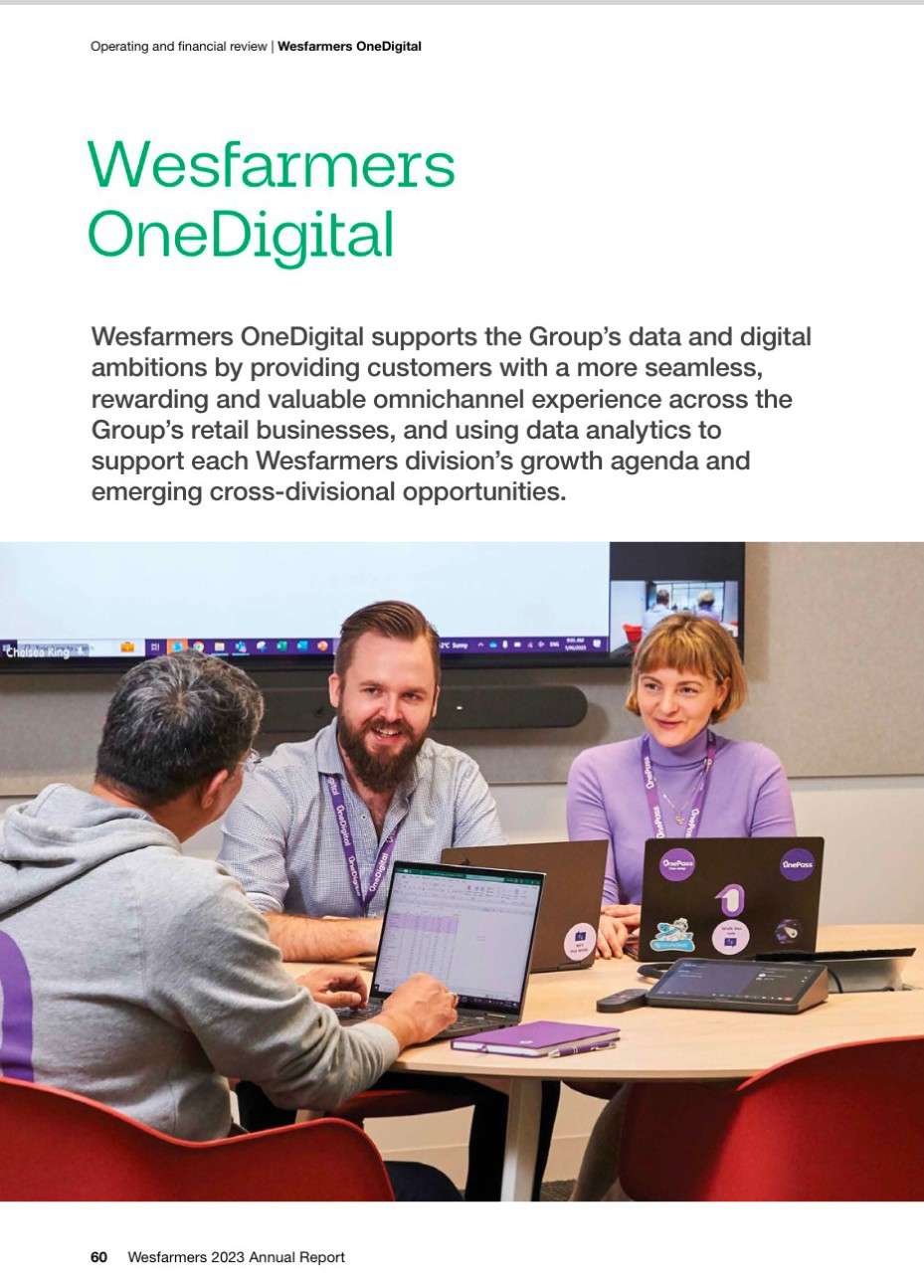
with a view to delivering improved performance and value over time. It was a year of investment for OneDigital,
and pleasing to see the initial rollout of the OnePass membership program and further enhancements in our shared data platform.
Together with the retail divisions, the OneDigital team have established the foundations for further improvements in
OnePass in coming months. The financial performance of Catch for the year was disappointing. Changes made
throughout the year started to deliver improved performance in the second half, and key operational and customer metrics are on a positive trajectory. Further,
investments in Catch are benefiting Group digital and e-commerce initiatives, in the areas of fulfilment, subscription and customer growth.
Outlook
As we look to the future, Wesfarmers remains focused on long-term value creation and continues to invest to
strengthen its existing businesses and develop platforms for growth. While overall economic conditions will
continue to present both opportunities and challenges, we have confidence that Wesfarmers is well positioned for the
current environment. Our retail divisions have strong value-
based, Omni channel offers providing essential and everyday products.
They will continue to benefit from increasing value-focus among consumers, expanding addressable markets,
population growth and much-needed investment in housing. Our industrial businesses have strategic domestic manufacturing capabilities that allow them to support world-class Australian export industries including agriculture, iron ore, gold and critical minerals. The Health division provides exposure to the growing health and
wellness sector, with opportunities to deliver more accessible and affordable healthcare.
Our businesses are delivering on plans to reduce their emissions profile, which will strengthen their competitive position. Production of lithium for battery electric vehicles in the coming year will further support our contribution to global decarbonisation efforts. Underpinning all of this is a strong balance sheet which provides flexibility to invest in
our existing businesses and pursue transactions that create value for shareholders over the long term. I express my gratitude to our dedicated team members across the Group for their exceptional contributions, as well as the Board for its invaluable support and guidance during another challenging year.
I would particularly like to acknowledge this year’s Leadership Team, including Emily Amos, Ian Bailey,
Michael Britton, Jenny Bryant, Tim Bult, Naomi Flutter, Anthony Gianotti, Ian Hansen, Aaron Hood, Sarah Hunter, Vicki Robinson, Mike Schneider, Nicole Sheffield and
Maya vanden Driesen. Your commitment and support have been instrumental in our success. Rob Scott Managing Director Wesfarmers 2023 Annual Report.
1 Rob Scott
MANAGING DIRECTOR AND
CHIEF EXECUTIVE OFFICER
WESFARMERS
Rob was appointed Managing Director and Chief Executive Officer in November 2017 following his appointment as Deputy Chief Executive Officer in February 2017.
Rob joined Wesfarmers in 1993, before moving into investment banking, where he held various roles in Australia and Asia. He re-joined Wesfarmers in Business Development in 2004, was appointed Managing Director of Wesfarmers Insurance in 2007 and then Finance Director of Coles in 2013. Rob was appointed Managing Director, Financial Services in 2014 and then Managing Director of the Wesfarmers Industrials division from August 2015 to August 2017. Rob is the Chairman of Rowing Australia and a Director of the Business Council of Australia.
2 Anthony Gianotti
CHIEF FINANCIAL OFFICER
WESFARMERS
Anthony was appointed Chief Financial Officer of Wesfarmers in November 2017. Anthony joined Wesfarmers in 2004 in Business Development and in 2005 was appointed Manager, Investor Relations and Business Projects. In 2006, he was appointed Head of Business Development and Strategy of Wesfarmers Insurance, then its Finance Director in 2009 and Managing Director in 2013. In August 2015, Anthony was appointed Finance Director
of the Wesfarmers Industrials division and its Deputy
Managing Director in February 2017. He is also a
director of West Australian Opera.
3 Maya vanden Driesen
GROUP GENERAL COUNSEL
WESFARMERS
Maya was appointed Group General Counsel in January
2015. Prior to this, Maya held a number of senior roles
in the company including Legal Counsel – Litigation,
Senior Legal Counsel and General Manager Legal –
Litigation. Before joining Wesfarmers, Maya practised
law at Parker & Parker and Downings Legal.
Maya is a Graduate of the Australian Institute of
Company Directors and sits on the Executive
Committee of the GC 100, representing the general
counsel of Australia’s top 100 ASX-listed companies.
Maya is a member of Chief Executive Women,
the UWA Law School’s Advisory Board, Director
for the Committee for Perth and Director of the
Bell Shakespeare Company.
4 Michael Schneider
MANAGING DIRECTOR
BUNNINGS GROUP
Michael was appointed Bunnings’ Managing Director
in 2016.
Michael joined Bunnings in 2005, and prior to this held
a range of senior operational, commercial and human
resource roles across regional and national markets,
in retail and financial services.
Outside Bunnings, Michael supports a range of
not-for-profit and community organisations. He holds
board roles with the Corporate Mental Health Alliance
of Australia, Melbourne United basketball club and
the Global Home Improvement Network. In addition,
Michael chairs FightMND and the Love Me Love You
Foundation.
5 Ian Bailey
MANAGING DIRECTOR
KMART GROUP
Ian was appointed Managing Director of Kmart in
February 2016 and assumed the responsibility for
leading Kmart Group in November 2018. Previously,
Ian was Kmart’s Chief Operating Officer where he
was instrumental in Kmart’s turnaround.
Ian’s national and international experience covers
a number of industries including retail, professional
services, consulting, technology and healthcare in
positions that include general management, sales,
business development and project management.
6 Emily Amos
MANAGING DIRECTOR
WESFARMERS HEALTH
Emily was appointed Managing Director of Health
in April 2022. She leads the turnaround of the
API business and the development of health-
related opportunities.
Prior to joining Wesfarmers, Emily’s recent roles
include Managing Director of BUPA Health Insurance
and Managing Director of BUPA Health Services in
Australia and New Zealand.
Emily is a former non-executive director of Adore
Beauty and has significant retail experience through
positions in Australia and the UK, in finance and
strategy. Emily is a member of Chief Executive
Women.
7 Sarah Hunter
MANAGING DIRECTOR
OFFICEWORKS
Sarah was appointed Managing Director, Officeworks
in January 2019.
Prior to this, Sarah worked across many areas of the
Coles Group in positions including Financial Controller,
State General Manager Victoria and Demerger Program
Director, overseeing Coles’ implementation of the
demerger from Wesfarmers.
Before joining Coles, Sarah worked in the UK for more
than 10 years, holding several senior commercial
positions in banking and airports including Strategy
and Finance Director for Gatwick Airport from 2004
to 2006.
Sarah is a Council member of the Australian Retailers
Association, a member of Chief Executive Women,
a Fellow of the Association of Chartered Certified
Accountants and a member of the Australian Institute
of Company Directors.
8 Vicki Robinson
EXECUTIVE GENERAL MANAGER,
COMPANY SECRETARIAT
WESFARMERS
Vicki was appointed Executive General Manager,
Company Secretariat in March 2020 and is the
Company Secretary of Wesfarmers.
Prior to this, Vicki was General Manager, Legal
(Corporate), playing a key role in many of
Wesfarmers’ key corporate transactions. Vicki joined
Wesfarmers in July 2003 as a Legal Counsel with the
Corporate Solicitors Office. In 2007, Vicki moved to
the role of General Manager for enGen, and returned
to the Corporate Solicitors Office in 2009.
Vicki is a director of RACWA Holdings Pty Ltd.
Leadership
Team
1
4
2 3
5 6
Wesfarmers 2023 Annual Report.
9 Tim Bult
MANAGING DIRECTOR
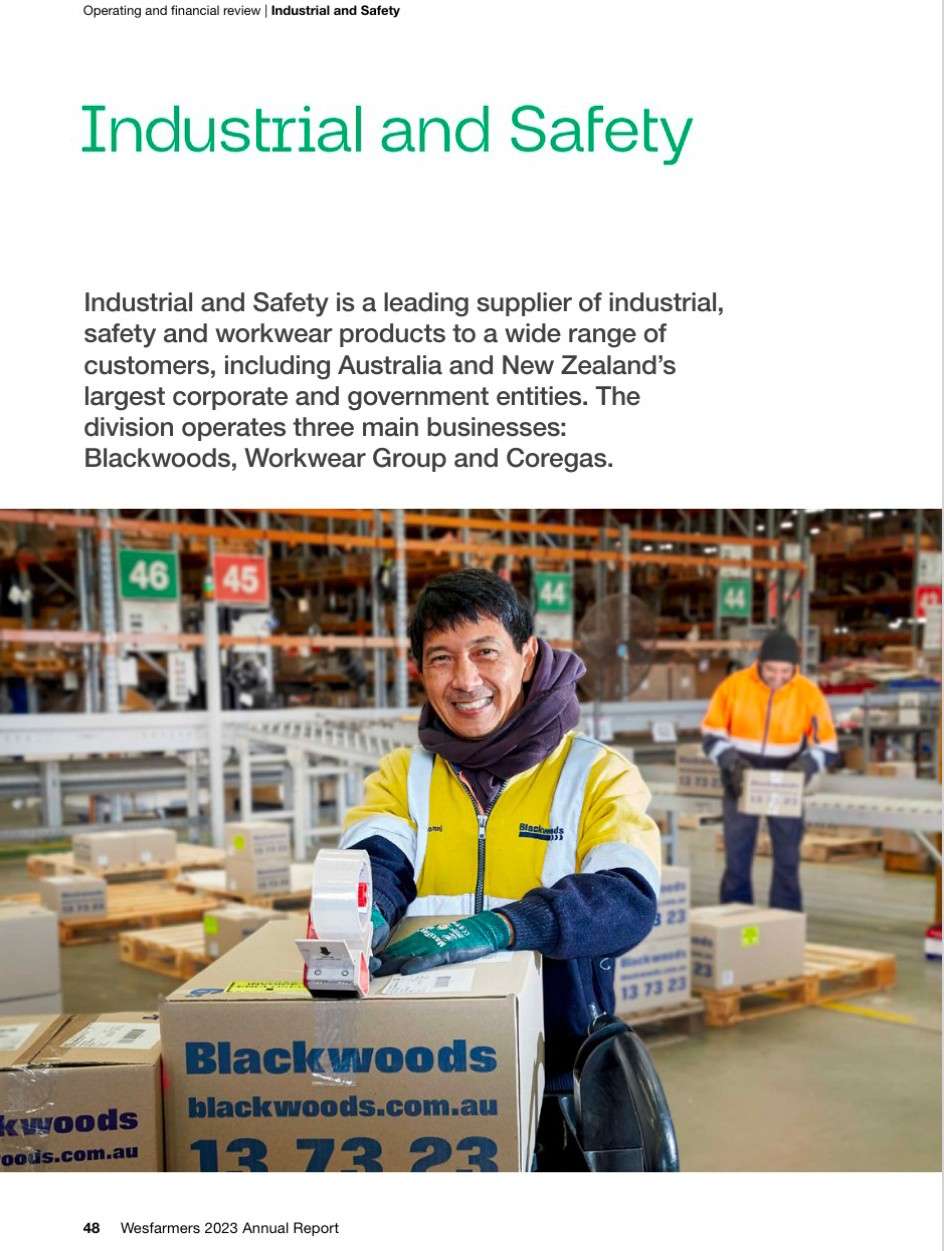
WESFARMERS INDUSTRIAL AND SAFETY
Tim was appointed Managing Director of Wesfarmers
Industrial and Safety in April 2020.
Having joined Wesfarmers in 1999, Tim worked in
commercial and business development roles within
the Wesfarmers Energy division, before his
appointment as General Manager of Wesfarmers
Kleenheat Gas in 2005. In 2006, he was appointed
Managing Director of Wesfarmers Energy. From 2009
to 2015, Tim was Executive General Manager,
Business Development. In 2015, he was appointed
Director, Associate Businesses and International
Development and in 2018 was appointed Project
Director for the demerger of Coles. In 2019, he was
appointed Director, Associate Businesses and
Corporate Projects at Wesfarmers.
10 Nicole Sheffield
MANAGING DIRECTOR
WESFARMERS ONEDIGITAL
Nicole was appointed Managing Director of OneDigital
in November 2021, and leads the strategy and
implementation of the Group-wide data and digital
ecosystem. This includes the OnePass membership
program and OneData, and from 1 July 2022, the
Catch business.
Prior to joining Wesfarmers, Nicole held a number of
leadership roles. Nicole was the Executive General
Manager, Community & Consumer, at Australia Post
where she led the Australia Post retail network of
4,400 post offices, all digital channels and the
customer contact centre. Previous roles include Chief
Digital Officer and Managing Director, Digital Networks
at News Corp Australia, overseeing digital strategy,
audience and subscription growth, and Chief
Executive of NewsLifeMedia, leading the lifestyle
publishing